For excavation and site work: answered from the cab.
Altitude builds excavation and site work contractors a website, an AI front desk that answers calls, texts and chat in English and Spanish, and a Themis workspace that tracks every bid. We built this for Gutvil, an excavation and stonework company in Colorado, in both languages.
The ground has a season, and the phone rings all year.
Where the ground freezes, digging has a window. Builders line up foundations, utility trenches and driveways for the months the ground can be worked, and they book whoever gets back to them while their schedule is still open.
You spend those months in an excavator cab with the engine running and ear protection on, or down in a trench. The phone is in the truck. A builder who gets voicemail calls the next name on the list, and that job is gone for the whole season.
The calls that matter don't all come in season, either. A drainage problem after snowmelt, a broken sewer line or a homeowner planning next year's addition can call in any month.
What missed calls cost you.
Four numbers from a typical week for excavation & site work, already filled in as starting points. Change them to yours; the answer is the work that rang and went somewhere else.
In dollars, from $50 to $100,000. For real estate, your side of one commission.
Starting points for excavation. Put in your own numbers; the estimate is only as good as they are.
Leaking every month, by your numbers
a month
About $195,000 a year.
About $16,250 a month leaking, about $195,000 a year.
- 11 calls a month go unanswered or come in after hours
- 3 of them would have become jobs at your close rate
Set that against a monthly plan. The plan is quoted in writing after a free walkthrough, and the front desk answers the calls this counts.
An estimate from the numbers you entered, not a measurement of your business and not a promise of results. Every missed call is counted as an ordinary inquiry at your close rate; some would have been spam or a wrong number.
What the front desk asks about a site.
We set it up with the work you do, the area you cover and the equipment you run. It sorts the builder with a schedule from the homeowner with a question, and writes down what you'd need to bid.
It asks
- 01Who's calling: a homeowner, a builder or general contractor, or a property manager
- 02The work: a foundation dig, utility trench, driveway, drainage, septic, grading, retaining wall or demolition
- 03The site address, and whether it's a raw lot or a house that's already there
- 04Access for equipment: slope, trees, a tight driveway, neighbors close by
- 05Whether there are plans or a survey you can look at
- 06When they need it, and a time for you to see the site or call back
Hola, soy contratista. Necesito excavar para unos cimientos en un lote nuevo. ¿Pueden empezar en mayo?
Caller
Hola, con gusto. ¿Cuál es la dirección del lote y ya tiene los planos? Le paso todo al dueño para que revise la fecha de mayo y le llame hoy.
Front desk
Builder, lot address and May start date in Themis. Owner buzzed.
The caller spoke Spanish, so the front desk answered in Spanish. An example of how a call can go. Not a real customer.
What an excavation website needs.
Builders want to know you can do the job and when. Homeowners want to know what the work involves. The site answers both.
A page for each kind of work
Foundations, utilities, driveways, drainage, retaining walls and stonework, each with photos of jobs you actually did.
The equipment you run
A plain list of your machines and what they reach, so a builder knows before calling whether you fit the job.
Service area and season
Where you work and when you can dig, written plainly, so a caller in January knows to book for spring.
Licensing and insurance
The license, insurance and bonding your area asks for, shown where builders look for it.
English and Spanish
A full site in both languages, as we built for Gutvil, for owners, crews and customers who speak either.
How Themis follows a bid through a long season.
Site work is bid months before it's dug. The follow-up has to last that long.
Bids with a date attached
A bid for a builder's spring start sits in Themis with a reminder ahead of that date, so you call before they pick someone else.
Builders become regulars
A builder who hires you once goes into Themis as a client, with their past jobs, so the next lot starts with you.
Off-season calls get kept
A homeowner who calls in winter about next year's addition is a lead with a reminder, not a note on the dashboard.
Reviews after the job
When the site is backfilled and clean, the review request goes out from Themis.
Built for site work: Gutvil.
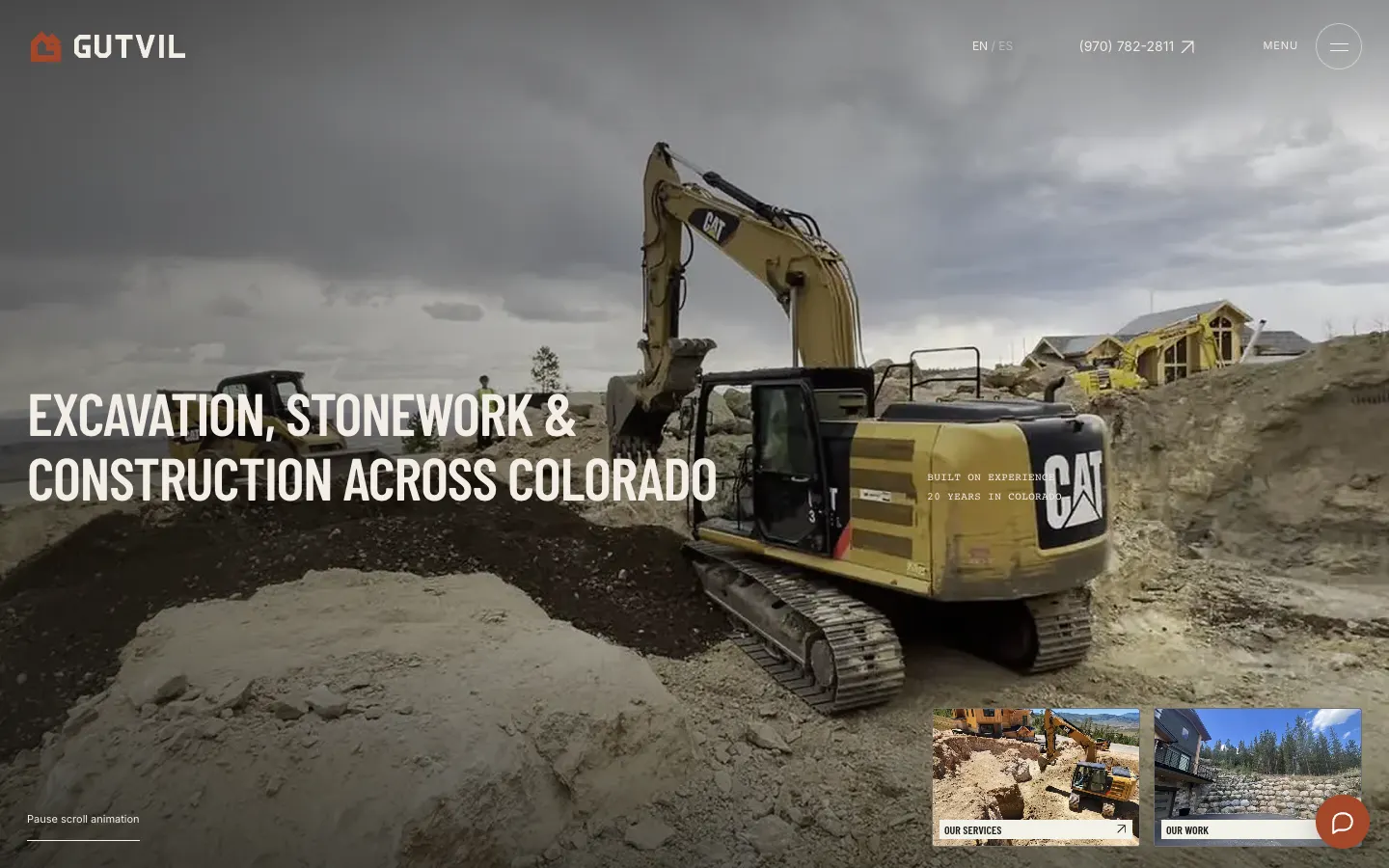
Gutvil is an excavation, stonework and construction company in Summit County, Colorado. We built its website in English and Spanish, its front desk Elena that answers the phone and site chat, and its Themis workspace. The case study shows what was built and what the owner reported after.
Questions people ask here.
Can the front desk tell a builder from a homeowner?
Yes. It asks who's calling first, then asks a builder about the lot, plans and start date and a homeowner about the problem and the address, and files each in Themis that way.
Does it work for a crew that mostly speaks Spanish?
Yes. The front desk answers in whichever language the caller uses, and the website can be fully in English and Spanish, as Gutvil's is.
What happens to a bid for a job months away?
It stays in Themis with a reminder before the start date, so you follow up while the builder is still choosing.